
Most first-time investors may be better served by diversified options such as flexicap or multi-cap funds, which already hold pharma and healthcare stocks.

The Indian government has reduced excise duty on petrol and diesel to mitigate the impact of rising global crude prices, triggered by geopolitical tensions in the Middle East. This move aims to provide relief to consumers and oil companies amidst volatile international oil markets.

The Insurance Regulatory and Development Authority of India's (Irdai's) decision to allow insurers to hedge risks through equity derivatives will help them manage market volatility and protect policyholder returns. However, this move is unlikely to alter their investment strategies.

BJP's Punjab unit chief Sunil Jakhar asserts the party's commitment to building a 'new Punjab' despite recent attacks, highlighting key issues like drug abuse and governance failures in the state.

Nayara Energy, a private fuel retailer in India, has increased petrol and diesel prices following a surge in global oil prices due to Middle East tensions. This move contrasts with state-owned retailers who continue to freeze prices.

Private life insurers experienced reasonable growth in the July-September quarter (second quarter, or Q2) of 2023-24 (FY24), and the October data is also encouraging. The individual weighted received premium (WRP) for private players grew by 19.8 per cent year-on-year (Y-o-Y) in October. However, Life Insurance Corporation (LIC) of India had slower growth, pulling the industry growth rate down to 13 per cent Y-o-Y.

Indian refiners are negotiating for additional crude cargoes from the US, Russia, and West Africa to ensure adequate supplies amid Middle East tensions. Refineries are maintaining normal processing rates and deferring maintenance to build reserves. The move comes as conflict impacts tanker movements through the Strait of Hormuz, a key energy transit route.

The Confederation of Indian Industry (CII) has proposed a 20-point policy agenda to the finance ministry, including a conflict-linked emergency credit line guarantee scheme and tax rationalisation on energy inputs, to support MSMEs, exporters, and energy-intensive industries affected by the ongoing West Asia war.

The NITI Aayog has recommended privatisation of state-owned insurer United India Insurance Company as the government aims to move ahead with its new public sector enterprise (PSE) policy for Atmanirbhar Bharat. The policy think tank has suggested that the public sector insurer be considered for privatisation in the banking, insurance and financial services sector, which has been classified as 'strategic' in the PSE policy, said an official. The policy proposes the "bare minimum" presence of government-owned companies in strategic sectors, and privatisation, merger or closure of remaining public sector undertakings (PSUs).
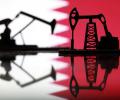
Qatar, India's largest supplier of imported natural gas, has declared force majeure on deliveries following a halt in production in the wake of an Iranian drone strike -- a disruption that has led to a cut in supplies to Indian industry by up to 40 per cent, sources said.

Despite international crude oil rates crossing USD 100 per barrel due to Middle East tensions, the Indian government plans to maintain current petrol and diesel prices, ensuring uninterrupted fuel supply across the country.

Will rising tensions between US-Israel and Iran threaten crude oil supply through the Strait of Hormuz, putting India's fuel prices, imports, and economic stability at risk?

'Being an important institution in the banking system, we are subject to regulatory supervision, both offsite and onsite.' 'When you look at the intensity at which these levels of supervision come, we, on the board and in management, believe there should not be any surprises.'

'Every day the meter is ticking. Like a time bomb.' Shipping giants are billing Indian exporters up to $3,000 per container in war surcharges -- on cargo that sailed before the war began -- as the Strait of Hormuz shuts down.

The Indian government has revised its natural gas allocation priorities, placing LPG production alongside CNG and piped cooking gas at the top, due to disruptions in imported gas supplies caused by the conflict in West Asia.

'We are getting used to the constant alerts to take shelter, listening to sonic booms from jets flying above us, hearing news of neighbouring ports being targeted, and being the only ship in the terminal.'

India's services sector experienced a slight moderation in growth during February, according to the HSBC India Services PMI Business Activity Index, with new order growth slowing and inflation picking up.

'The kind of reach it has with so many bank branches even in the remotest part of the country, it is one channel which will play a very important role in vision of insurance for all.'

Qatar has halted liquefied natural gas (LNG) production after its facilities came under attack amid the ongoing West Asia conflict, disrupting supplies to India and squeezing feedstock availability for key domestic sectors.

'Was the five-day pause ever meant to hold, or was it simply another instrument of signaling, of positioning, of buying time in a war where even the pauses are tactical?' asks Prem Panicker in his must read daily blog on the Gulf War.

Iran is fighting a different war: Older, slower, and in some ways more dangerous. Iran doesn't need to shoot down an F/A-18. It only needs to make the Strait of Hormuz feel dangerous long enough for insurance markets, shipping companies, and oil futures traders to do the rest. Prem Panicker continues his must-read daily blog on the war in the Middle East.

Analysts predict India will face oil price volatility and macroeconomic effects due to the escalating Iran crisis, though the country's oil supply chain is not yet structurally insecure.

Two of the three strikes are related to the gig economy, a centrepiece of the new labour Codes.

CPGRAMS -- an online platform available to citizens 24x7 to lodge their grievances to public authorities on service delivery -- has existed for close to two decades. But it has never been this active, points out Tamal Bandyopadhyay.

Sunil Bharti Mittal-led conglomerate Bharti Enterprises and private equity firm Warburg Pincus will collectively acquire a 49 per cent stake in Haier Appliances India, the local unit of China's Shandong-based Haier group, for an undisclosed amount. The transaction, according to industry sources, values the company at about 15,000 crore.

India possesses approximately 100 million barrels of commercial crude oil stocks, capable of covering 40-45 days of its requirements if flows through the Strait of Hormuz are disrupted, according to Kpler.
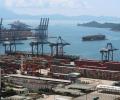
With the Iran war escalating sharply and crisis deepening in the global energy market, India on Monday unveiled a coordinated plan to support exporters and shippers caught in the fallout.

'Foreign capital will continue to come directly into India, but companies have realised that GIFT City is a more cost-efficient way of channelling funds.'

HCLTech expects its recent large acquisitions to contribute about 1.5 per cent to revenue in 2026-27 (FY27), Chief Executive Officer and Managing Director C Vijayakumar said, as the company looks to build newer revenue streams in a subdued macroeconomic environment.

LIC said USTR's views are based on an incomplete understanding of Indian insurance regulation and LIC's functioning.

Life insurance companies reported a 13.16 per cent year-on-year (Y-o-Y) growth in new business premium (NBP), totting up Rs 30,347 crore in October, even as the number of policies sold saw a sharp decline. The growth was largely driven by strong performance from private sector life insurers.

The strong domestic flow offset selling by foreign portfolio investors who pulled out $23.3 billion (Rs 2.03 trillion) from domestic equity markets in CY25.

'Given that the population is almost evenly split, the Indian economy cannot grow without women participating in the workforce.' 'While women's participation has increased, it is still well below 40 per cent,' says Kartik Narayan, CEO of the professional networking and jobs platform, Apna.

'They take care of the problem: How can I ensure my child's education and other goals are not compromised, even if I am not around?'

The four public sector general insurance companies -- New India Assurance, United India Insurance, Oriental Insurance, and National Insurance Company -- have lost 800 basis points (bps) in market share in last five years to their private counterparts, the data from the Insurance Regulatory and Development Authority (Irdai) revealed. In 2018-19, the four had a cumulative market share of 40.04 per cent, with New India Assurance having a market share of 14 per cent and United India Insurance with a market share of 9.63 per cent. But, gradually in the past five years, these state-backed firms have lost their market share to private sector players, due to the declining health of their business.
India's $280-billion IT industry heads into 2026, balancing visa-related headwinds and global trade uncertainty against its biggest-ever push into artificial intelligence and the rapid expansion of global capability centres (GCCs). Heightened scrutiny of the US H-1B visa programme - including a proposed $100,000 fee for new visas and concerns over a potential 25 per cent outsourcing tax - has complicated cross-border delivery for Indian firms, even as companies accelerate efforts to reduce reliance on onsite staffing.
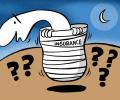
All the four listed private life insurance companies recorded a drop in value of new business (VNB) margin in the financial year 2023-24 (FY24) as compared to FY23. This is because of a higher share of unit-linked insurance plans (Ulips) in the product mix. VNB is a measure of the economic value of profits expected to emerge from a new business.

Yet another first week of December brought familiar scenes of rain, storm, flooding, power outages, and fallen trees. When Cyclone Michaung wreaked havoc, leading to the heaviest rainfall in 47 years in the city, residents of Chennai drew parallels to the devastating floods of 2015. However, initial data on insurance claims suggests that the impact this time may portray a more optimistic scenario.

Five state-run general insurance companies have a total exposure of Rs 347.64 crore, or 0.14 per cent of their total assets under management (AUM), in Adani group of companies, the finance ministry said on Monday. In a written reply to a question by Congress' Manish Tewari, Minister of State for Finance Bhagwat Karad said Life Insurance Corp (LIC) held Rs 35,917.31 crore in debt and equity of Adani group of companies as on December 31, 2022. This is 0.97 per cent of its total assets under management (AUM) of Rs 41.66 trillion.
New business premium (NBP) growth of life insurers in March is expected to be weak owing to the high base effect in the year-ago period due to revision in taxation norms for high-value policies, insurers said. In the Budget, Finance Minister Nirmala Sitharaman proposed that insurance policies (excluding unit-linked insurance plans or Ulips) with an aggregate premium exceeding Rs 5 lakh would be taxed. This rule came into effect on April 1, 2023. In March 2023, the NBP of life insurance companies witnessed a strong growth after the tax announcement. Premiums rose by 14.45 per cent year-on-year (Y-o-Y) to Rs 59,608.83 crore in March 2023 from Rs 52,081.12 crore.
